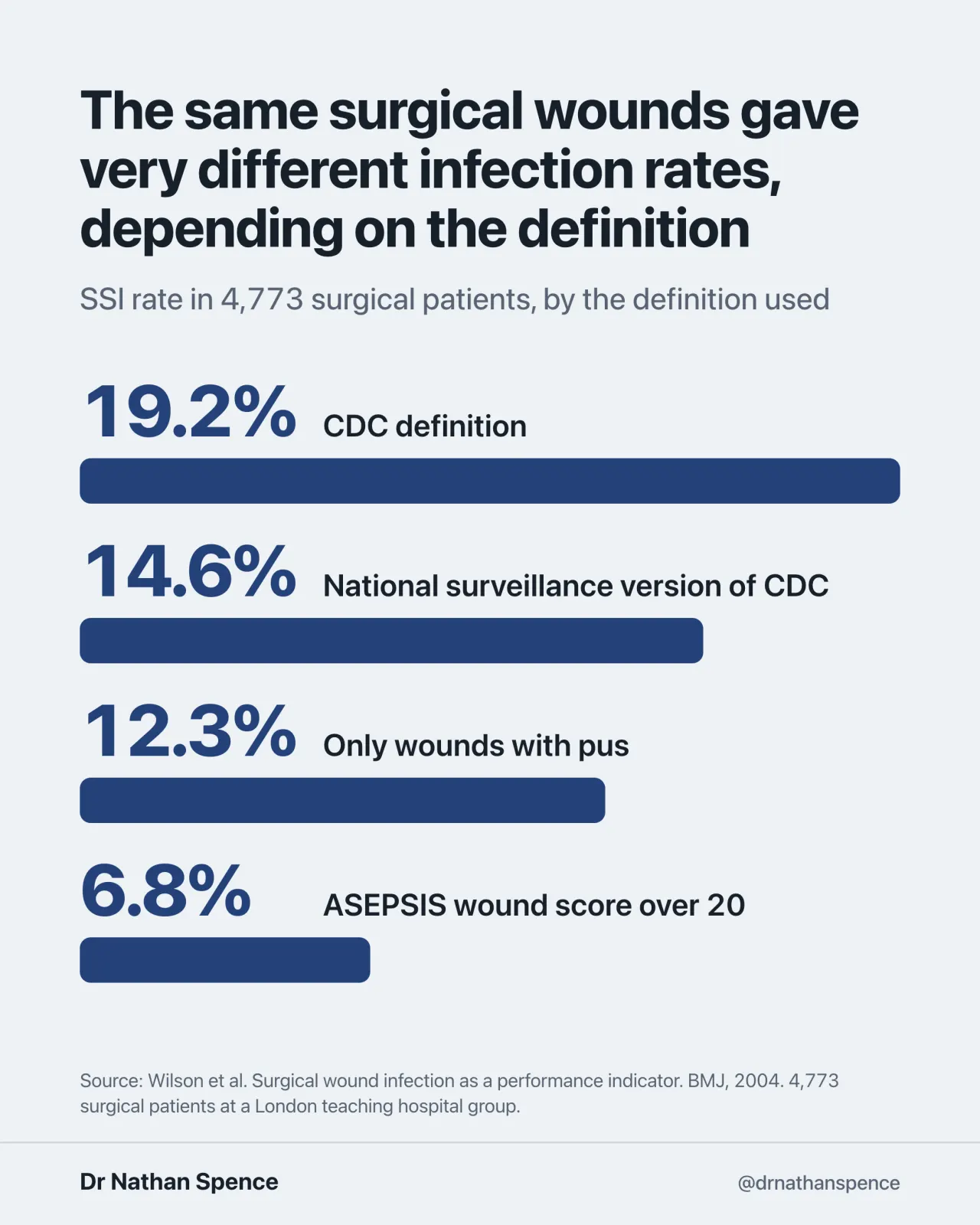
By the CDC definition, 19.2% of 4,773 surgical patients had a surgical site infection. If you only count wounds with pus, it was 12.3%.
It’s the same patients and the same wounds. That’s a BMJ study from a London teaching hospital group, back in 2004, and two other definitions in it gave 14.6% and 6.8%.
So if one hospital reports 12% and another 19%, which is doing better? Well, you can’t tell. The whole difference could just be how they counted, and as the authors put it, “differences in interpretation prevent comparison between different centres.”
And infection is only part of it. Wounds also dehisce, or develop a seroma or haematoma. The CDC definitions cover infection only.
DISH is meant to fix that. It stands for Dehiscence, Inflammation/Infection, Seroma and Haematoma, and it was published in BJS in August, open access. The paper calls it a “common language” for surgical site outcomes.
It was led by Giles Bond-Smith, a surgeon here in Oxford, who I’ve been lucky to have as a mentor. A panel of 32 experts from 22 countries agreed the definitions.
It’s early, though. So far it’s only been validated on written cases, not on real patients.
When I first wrote about DISH last year, I said it would change how we think about wounds in surgery. Now it has to show that on the ward.