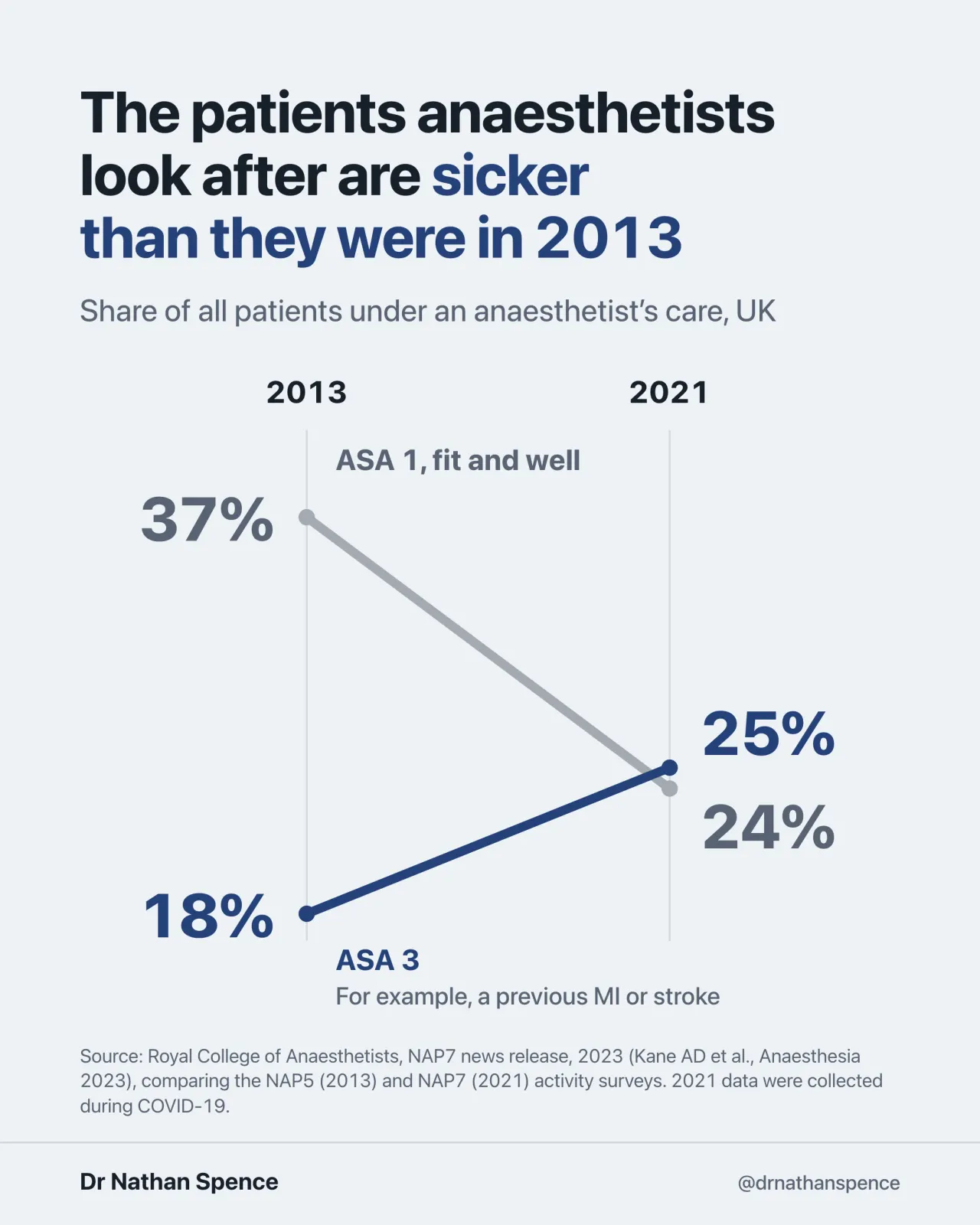
The patients anaesthetists look after are sicker than they were in 2013, and so are the ones we see in perioperative medicine.
Today’s World Anaesthesia Day, 180 years since doctors at Massachusetts General Hospital in Boston gave the first public demonstration of ether anaesthesia, on 16 October 1846.
The patients have changed a lot since then, and even in the last decade. Between the Royal College of Anaesthetists’ national audits in 2013 and 2021, the share who were ASA 1, fit and well with no comorbidities, fell from 37% to 24%. ASA 3, someone with a previous MI or stroke, for example, went from 18% to 25%. In 2013 there were twice as many ASA 1 patients as ASA 3 ones. By 2021 it was about even.
2021 was still a COVID year, which is a fair reason to be a bit cautious. The audit team think the change is real, and it matches what I see at the surgical front door.
I see these patients either side of theatre. I assess them as a physician before they’re anywhere near an anaesthetic room, and I’m still looking after them once they’ve left recovery.