We need surgeons doing the operating, and we need physicians dealing with everything else. That’s surgical medicine.
I’m a physician, and all of my patients are surgical. I work at the surgical front door in Oxford.
So when someone comes in acutely unwell under the surgeons, I assess them as a medic, as part of the surgical team, particularly if they’re complex or comorbid. Then I look after the medical side before and after the operation.
Take an 80-year-old who needs an emergency laparotomy but is also in fast AF with an AKI. The operation is the surgeons’ job. Getting his heart rate, fluid balance and renal function to a point where he can get through it, that’s where I come in.
Patients like that aren’t rare. Surgery is becoming more complicated. Patients are becoming more complicated.
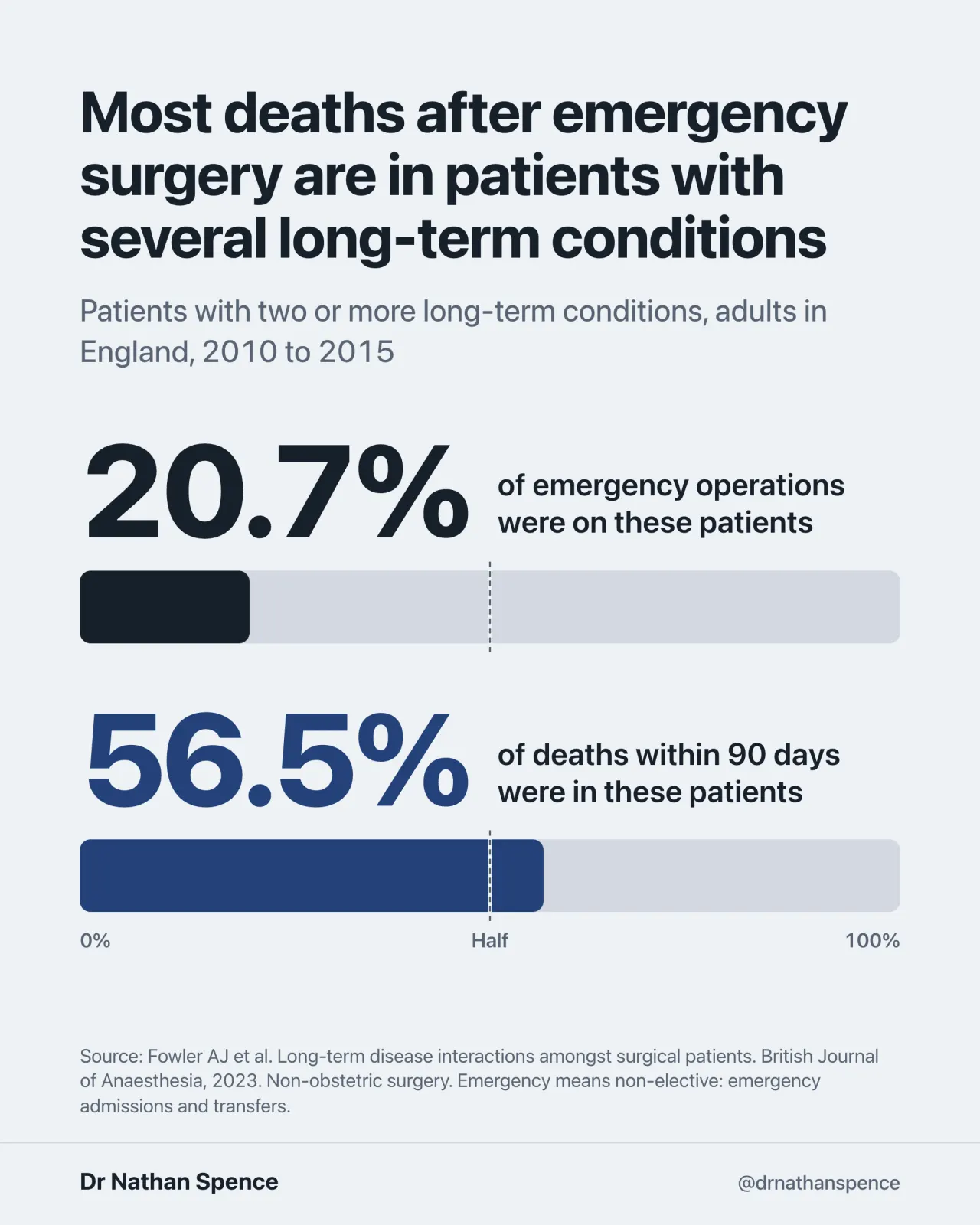
In England, about one in five emergency operations was on someone with two or more long-term conditions, and that group accounted for more than half of the deaths in the 90 days afterwards. That’s from a national study of NHS surgery between 2010 and 2015, published in the British Journal of Anaesthesia in 2023.
Those are the patients who need someone thinking about the operation and everything around it.
Looking after surgical patients directly as a physician is slightly unusual. But I think it’s where surgical care is going.
I still work full time on a normal rota, and I’ll be writing here about what that job actually looks like at the front door.